 Zhangjiajie China Tour
Zhangjiajie Glass Bridge: What the ¥178 Ticket Actually Buys
The Zhangjiajie glass bridge is not in the national forest park. It hangs over the Grand Canyon in Cili County, about 40 minutes' drive from Wulingyuan, and it sells no ticket that covers only the crossing. ¥178 buys the canyon and the bridge together, which means the visit is half a day rather than the hour most people budget. Our guided park tours and ticket combinations fold that drive and the ticket into one price.
Quick answer
Walking the Zhangjiajie glass bridge costs ¥178, which covers the Grand Canyon scenic area and the bridge together. There is no bridge-only ticket. Entry is capped at 8,000 visitors a day and gates run roughly 09:00 to 15:30, so book at least three days ahead in spring and autumn and treat it as a half-day trip out of Wulingyuan.
Key takeaways
- ¥178 for canyon plus bridge, ¥60 for the canyon alone, and nothing sold for the bridge by itself
- 430 metres long, 6 metres wide, 300 metres above the gorge floor, opened in August 2016
- 8,000 visitors a day is the cap, and the booking system enforces it
- A guided day pairing the bridge with Tianmen Mountain costs $133 with both tickets included
- Zip lines, slides and lifts inside the canyon run ¥20 to ¥50 each and sit outside the ticket
- The 285-metre bungee from the deck is billed as the highest bungee jump in the world
Getting There Without Renting a Car
No public bus runs to the canyon from Wulingyuan on a schedule worth planning around. These are the ways visitors reach it: a guided day that includes the ticket and the drive, or a two-day itinerary that fits the bridge around the Avatar peaks.
 from $59Top Rated — 4.8★, 226 Reviews
 1–2 Day Small-Group Zhangjiajie Tour: Avatar Peaks, Glass Bridge & Tianmen Mountain
A small-group alternative capped at about 12 travellers, run by a Zhangjiajie agency with English-speaking guides and audio headsets. Day one covers the Forest Park core: Bailong Elevator…
- Groups capped at about 12 people, English-speaking guide plus audio headsets
- Two glass walks: Grand Canyon Glass Bridge and the Tianmen cliff walkway
- Ten Miles Gallery and the Three Sisters Peaks on day one
- Guaranteed no shopping stops
 from $99Top Rated — 4.9★, 666 Reviews
 1–2 Day All-Inclusive Zhangjiajie Tour: Avatar Mountain, Glass Bridge & Tianmen Mountain
The highest-rated guided Zhangjiajie itinerary on GetYourGuide, and the one that bundles every headline sight into one price: Forest Park with the Bailong Elevator and Hallelujah Mountain on…
- Day 1: Bailong Elevator, Yuanjiajie, Hallelujah Mountain, Yangjiajie, Tianzi Mountain
- Day 2: Grand Canyon Glass Bridge, then Tianmen Mountain cableway and 99-bend road
- All entry tickets, park shuttles, elevator and cable cars included
- Hotel pickup near the Forest Park East Gate or in downtown Zhangjiajie
The Bridge Itself
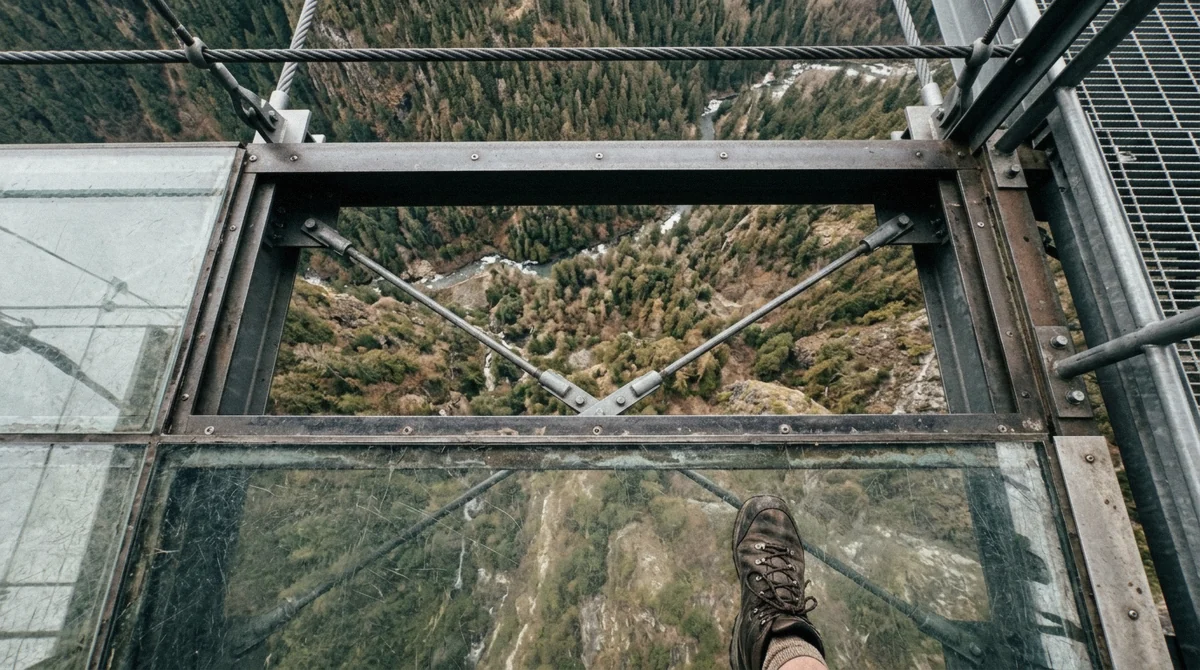
What Haim Dotan Built
Israeli architect Haim Dotan designed the span, and it opened on 20 August 2016 as the longest and highest glass-bottomed bridge in the world. It runs 430 metres between two cliffs, is 6 metres wide and hangs about 300 metres above the canyon floor.
The deck is a steel frame carrying more than 120 glass panels, each one three layers laminated into a slab 5.1 centimetres thick. The structure is rated for 800 people at a time. Four support pillars stand on the canyon rims, and nothing touches the ground in between.
It no longer holds the length record. A glass bridge in the Hebei Grand Canyon scenic area took that title, which is worth knowing before you plan a trip around a superlative.
The Thirteen Days It Lasted the First Time
The bridge closed on 2 September 2016, thirteen days after opening. The reason was arithmetic: the design expected about 8,000 visitors a day and more than 80,000 were turning up. Authorities suspended it to rebuild the car parks, the ticket-booking system and the visitor handling, and reopened it on 30 September 2016.
That episode is why the daily cap and the advance-booking rule exist now, and why a walk-up attempt in October usually fails. The system that was bolted on after the closure is the same one you book through today.
What the Walk Feels Like
Shorter than the numbers suggest. At a normal pace the crossing takes a few minutes, and the glass is opaque with scuffs down the middle where everyone walks, clearer along the edges where fewer people tread.
Staff hand out shoe covers and stop anyone trying to carry a tripod or a selfie stick over the span. Photography is allowed, crowding in one spot is not, and on busy days marshals keep people moving.
Three long swings hang under the deck, and the bungee platform drops 285 metres, billed as the world's highest bungee jump. Both are separate purchases and both need booking on the day at the operator's stand.
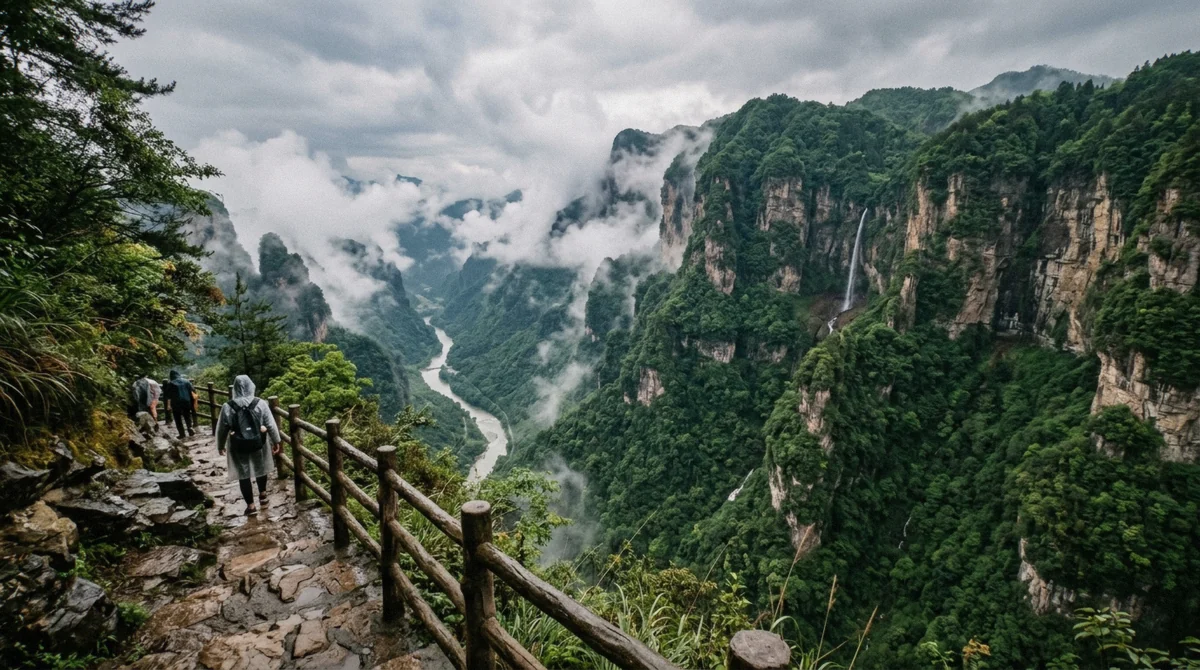
The Canyon Under It
The canyon is the half of the ticket nobody reads about. A path descends through forest to the water, past waterfalls and a rainbow boat that ferries you to the exit, and it takes two to three hours at a walking pace.
That descent is why the ¥178 ticket makes sense once you are there. Buying it for the bridge alone means walking 430 metres and leaving, at which point you have paid canyon prices for five minutes.
An elevator and a zip line short-cut the descent for anyone with knees that object, at ¥20 to ¥50 a ride. Neither is in the ticket.
The Numbers Behind the Deck
Two of these figures are why the bridge exists at all, and two are why the visit is managed the way it is.
What Each Ticket Covers
Four ways to price the same morning. The guided figures include the drive from Wulingyuan, which is the cost people forget.
| Ticket | Price | Covers | Book | Time |
|---|---|---|---|---|
| Canyon only | ¥60 | The gorge walk, no bridge | 2 to 3 h | |
| Canyon + bridge | ¥178 | The standard combination, insurance included | 3 to 4 h | |
| Guided day with Tianmen | $133 | Both scenic areas, tickets and transfers | Full day | |
| Two-day with the park | $185 | Avatar peaks day one, canyon and bridge day two | 2 days |
Booking and Timing
Hours, Cap and the Booking Window
Gates run roughly 09:00 to 15:30, later than the national park's 06:30 opening and earlier at the close, which is why the bridge does not combine well with a full park day.
The 8,000-a-day cap is enforced through the booking system, and slots in April, May, September and October fill days ahead. Three days of notice is the working minimum in those months; a week is safer around public holidays.
High wind and storms suspend crossings without warning. Nothing about the bridge is weather-proof, and the refund handling depends on whoever sold you the ticket.
- Book at least three days ahead from March to May and September to November
- Carry the passport the booking was made under
- Small notes for shoe covers, swings, zip lines and the boat
- No tripods, no selfie sticks on the span
- Allow half a day including the drive, not an hour
Where It Fits in a Zhangjiajie Trip
Most people arrive with three sights on the list: the Avatar peaks in the national park, Tianmen Mountain above the city, and this bridge. Three scenic areas, three tickets, three different drives, and a bridge that opens at 09:00 and closes at 15:30.
That timetable rules out the combination people try first. A park morning cannot roll into a bridge afternoon, because you would arrive with an hour left and the canyon walk alone takes two. The pairing that works is the bridge with Tianmen Mountain on one day, which is exactly how the $133 guided day is built, or the bridge as the second day of a park itinerary.
If you have only two days in Zhangjiajie, the honest answer is to skip it. Two days barely covers the pillars, and the pillars are what the region is known for. The bridge earns its half day on a trip of three days or more.
Reaching the Canyon
The bridge is in Cili County, east of Wulingyuan and about 60 kilometres from Zhangjiajie city. A taxi from the city costs ¥200 to ¥230 one way and takes an hour to an hour and a half. From Wulingyuan the drive is about 40 minutes.
There is no useful public bus, so independent visitors either negotiate a taxi to wait or book a car for the day. Guided days include the transfer, which is most of why they price where they do.
| From | Distance | Time | Typical cost |
|---|---|---|---|
| Wulingyuan hotels | About 25 km | 40 min | Taxi, or included on a guided day |
| Zhangjiajie city | About 60 km | 1 to 1.5 h | ¥200 to ¥230 by taxi, one way |
| Tianmen Mountain | About 60 km | 1 h | Usually combined on one guided day |
| Forest Park East Gate | About 30 km | 45 min | Half a day out of a park day |
Glass Bridge Questions
Is the glass bridge at Zhangjiajie worth it?
It is worth it if you treat the ¥178 as a canyon ticket that includes a bridge, not a bridge ticket. The crossing itself takes a few minutes on scuffed glass among a crowd. The gorge walk below it, two to three hours through forest and waterfalls to the boat at the exit, is the part visitors describe afterwards. Coming only for the span, and skipping the descent, is where the disappointment comes from.
How much does a ticket to Zhangjiajie Glass Bridge cost?
¥178, which covers the Grand Canyon scenic area and the bridge together and includes insurance. The canyon alone is ¥60. No ticket is sold for the bridge on its own. Swings, zip lines, the elevator and the 285-metre bungee are all separate, from ¥20 up. A guided day that includes the ticket and the drive runs $133 with Tianmen Mountain attached.
Which month should you avoid in Zhangjiajie?
Skip 1 to 7 October and 1 to 5 May. Both national holidays overwhelm the whole region, and the bridge's 8,000-a-day cap means tickets simply run out rather than queues forming. Chinese New Year is the third to avoid. March to May and September to mid-November are the best windows, and the full month-by-month breakdown sits on our main page.
What is the world's longest glass bridge?
Not this one, any more. Zhangjiajie held the record when it opened in 2016 at 430 metres, then a glass bridge in the Hebei Grand Canyon scenic area took the title. Zhangjiajie's claim now rests on the combination of length, the 300-metre drop and the bungee rather than any single number.
Is the glass bridge inside Zhangjiajie National Forest Park?
No. It spans the Grand Canyon in Cili County, roughly 40 minutes from Wulingyuan, and charges its own ticket. The ¥240 park pass does not cover it and it does not cover the park. Our ticket page sets out how the three scenic areas price separately.
How safe is the bridge?
The deck carries more than 120 panels, each three laminated layers making up 5.1 centimetres of tempered glass, on a steel frame rated for 800 people at once against a daily cap of 8,000. Staff close it in high wind. The 2016 shutdown was a crowd-handling failure rather than a structural one, and the booking system that came out of it is what keeps numbers within the design.