 Zhangjiajie China Tour
Best Time of Year to Visit Zhangjiajie: Month-by-Month Guide
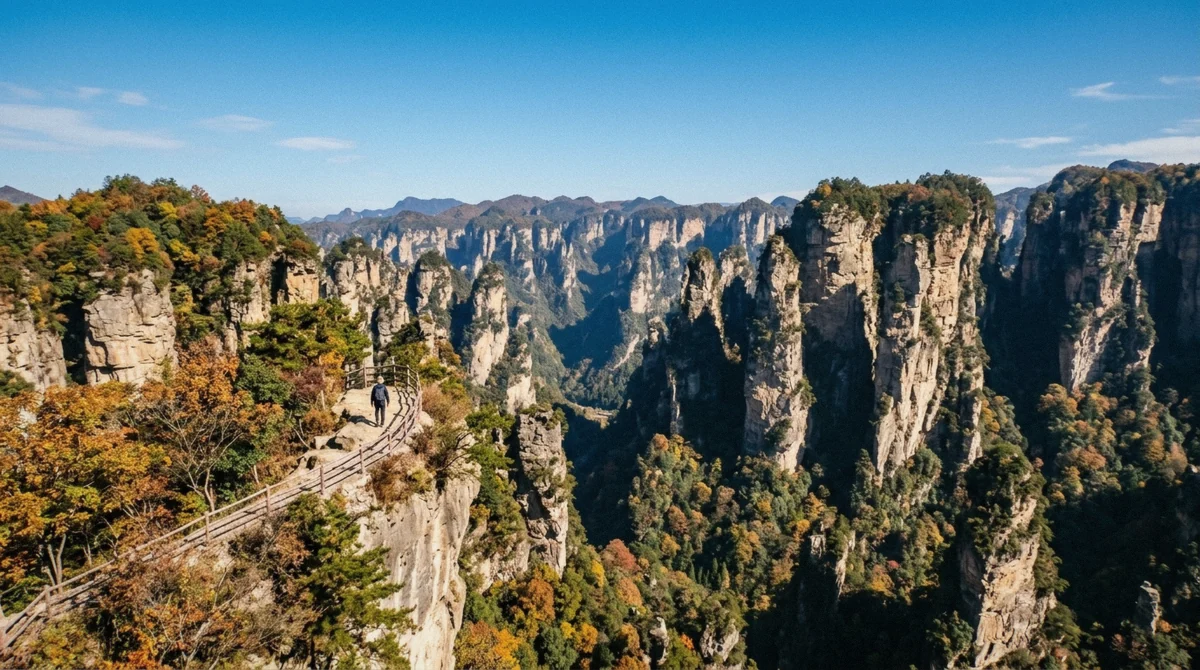
The best time to visit Zhangjiajie is late October through mid-November, when the sandstone pillars stand under the clearest skies of the year and the summer crowds have thinned. April offers a milder runner-up window with its own share of mist and rain. June and July, timed with Chinese school holidays, are the months to actively plan around rather than into. Prices and departures for the season you pick sit on our Zhangjiajie park tour and ticket comparison. This guide breaks the year down month by month, with real temperature and rain numbers, so a trip lands on the right week instead of a rough season.
Quick answer
Late October through mid-November is the best time to visit Zhangjiajie, when cooler, drier air holds the sky open over the pillar forest for days at a stretch. April is the honest runner-up, milder than March with fewer rain days than May. June and July run the wettest and most crowded weeks of the year.
Key takeaways
- Best window: late October to mid-November, the clearest and driest stretch of the year
- Runner-up: April, warmer and drier than March, before Labour Day week crowds arrive
- Avoid: June for rain, July for heat and crowds, and National Day week, 1 to 7 October, when ticket slots sell out
- Counterintuitive fact: summer's heavy rain is also what produces the sea-of-clouds view at Tianzi Mountain
- Best time of day: the 06:30 first entry slot, well ahead of the coach groups
- Winter (December to February) runs the lowest prices and thinnest crowds of the year
Seasons at a Glance
A quick read on how the four seasons compare before the month-by-month detail below.
| Season | Weather | Rain | Crowds | Verdict |
|---|---|---|---|---|
| Spring (March-May) | 15-25°C, warming through the season | 7-12 days a month | Building toward Labour Day week | April is the balanced pick |
| Summer (June-August) | 25-34°C, hottest of the year | 10-13 days a month | Busiest, July peaks with school holidays | Wettest and most crowded |
| Autumn (September-November) | 13-25°C, cooling and drying | 6-8 days a month | Thin after September, except National Day week | Best overall window |
| Winter (December-February) | 5-12°C, colder on the summits | 3-5 days a month | Quietest of the year | Cheapest, clearest by midday |
Every season here has a real reason to visit; the difference is what trade-off a traveler is willing to make between clear skies, crowd size, and price.
Spring (March to May): Warming Up, Still Misty
Spring runs 15 to 25°C, with rain on 7 to 12 days a month across the season. March stays chilly and often foggy, closer to winter's numbers than to what April delivers. April is the best-balanced month of spring, warmer and drier than March, with the pillars still catching morning mist rather than a full haze.
May starts sliding toward summer's heat and crowd levels, especially around Labour Day week.
- March: cooler end of the spring range, frequent fog, most rain-prone of the three months
- April: the most balanced week-to-week weather of spring
- May: warming fast toward summer, Labour Day week (1 to 5 May) crowds spike hard
- Booking lead time: a few days ahead is enough outside Labour Day week
Summer (June to August): Hot, Wet, and Crowded
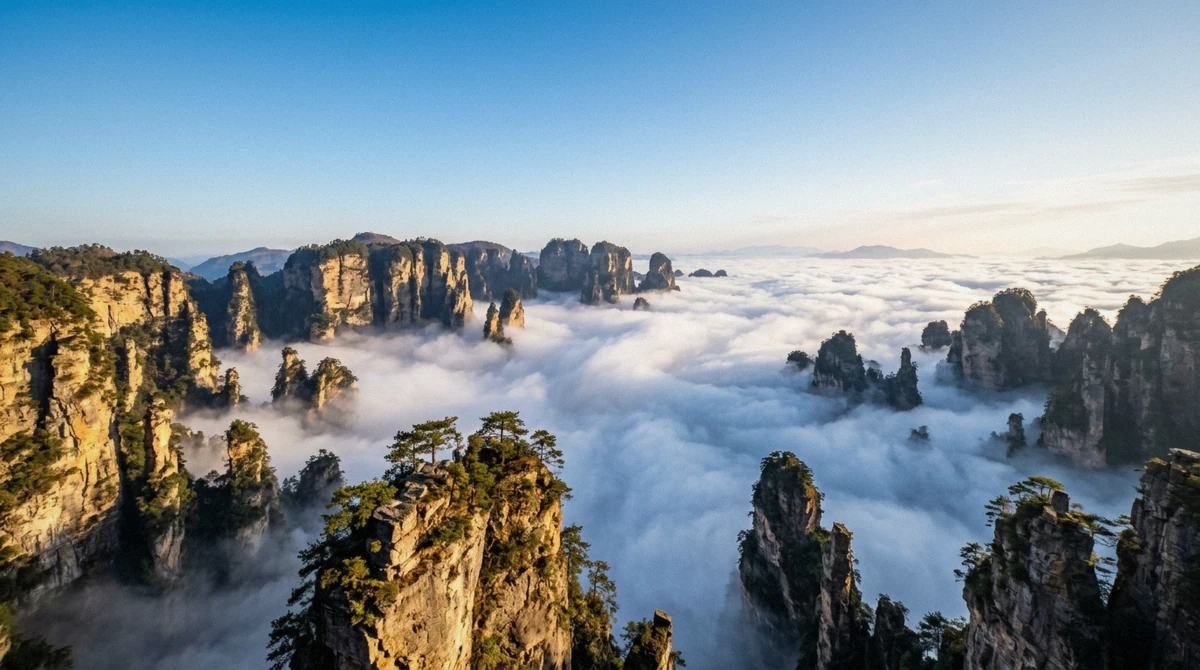
Summer runs 25 to 34°C, with rain on 10 to 13 days a month, the wettest window of the year. June is the rainiest month outright, while July is both the hottest and the busiest, timed with Chinese school holidays. The rain that falls through summer is also what produces the sea-of-clouds view photographers chase at Tianzi Mountain, condensing in the valleys between pillars, though it shortens the number of reliably clear sightseeing hours in a day.
- June: wettest month of the year, rain most likely to interrupt a full day
- July: hottest month, 25-34°C typical, and the busiest with domestic school holidays
- August: heat persists, crowds ease slightly after the July peak
- Booking lead time: a week or more ahead for July weekends
Autumn (September to November): The Clearest Window
Autumn runs 13 to 25°C, with rain on just 6 to 8 days a month, the driest stretch of the year. Crowds thin noticeably after September, aside from National Day week, and the clearest views of the whole year arrive late October through mid-November, when cooler, drier air settles over the pillar forest and holds the sky open for days at a stretch.
- September: rain easing, crowds still elevated through National Day week
- October: the transition month, clear stretches building through the second half
- Late October to mid-November: the single best window for a clear-sky visit
- Booking lead time: a few days ahead outside National Day week (1 to 7 October)
Winter (December to February): Cold, Quiet, Cheapest
Winter runs 5 to 12°C in the valley, with precipitation on just 3 to 5 days a month, and snow arriving from late December through February. Summits run noticeably colder than the valley floor, and midday is the clearest stretch of a winter day. This is also the cheapest season for both tours and hotels, and the quietest, for travelers willing to trade warmth for thinner crowds and lower prices.
- December: snow risk builds from late in the month
- January-February: coldest stretch, summits colder still than the 5-12°C valley range
- Midday is the clearest window on a winter day, mornings often carry lingering mist
- Lowest prices and thinnest crowds of the year
Month-by-Month Temperatures and Rain
Figures below are typical seasonal ranges, not a forecast for specific days; check conditions close to your travel dates.
| Month | Typical range | Rain | Note |
|---|---|---|---|
| January | 5-12°C | 3-5 days | Coldest stretch, summits colder than the valley |
| February | 5-12°C | 3-5 days | Snow still possible early in the month |
| March | 15-25°C | 7-12 days | Chilly and often foggy, cooler end of spring |
| April | 15-25°C | 7-12 days | Best-balanced month of spring |
| May | 15-25°C | 7-12 days | Warming fast, Labour Day week crowds |
| June | 25-34°C | 10-13 days | Wettest month of the year |
| July | 25-34°C | 10-13 days | Hottest and busiest, school holidays |
| August | 25-34°C | 10-13 days | Heat persists, crowds ease slightly |
| September | 13-25°C | 6-8 days | Rain easing, National Day crowds late month |
| October | 13-25°C | 6-8 days | Clear stretches build through the month |
| November | 13-25°C | 6-8 days | Clearest window continues through mid-month |
| December | 5-12°C | 3-5 days | Snow risk builds late in the month |
July runs the hottest by the season's own numbers, January and February the coldest, and June the wettest. Rain is what produces the sea-of-clouds views this park is known for, but it also shortens the clear sightseeing hours in a day, which is the trade every rain-heavy month makes.
What Actually Affects the Views
Most visitors assume any rain ruins the day. It doesn't, not entirely. Light rain here often thickens into the cloud-sea effect that makes Tianzi Mountain's summit views famous, cloud pooling below the peaks while the ridgelines stay clear above it.
What actually cancels a cableway is wind, not rain on its own. Lift operators pause a car when gusts cross a level they judge unsafe on the exposed steel towers, independent of whether the sky is otherwise clear. That's why a technically rainy month like June can still deliver a genuinely spectacular hour at Tianzi Mountain, while a dry, sunny but windy day in any season can ground a lift outright.
Humidity plays a role too: the valley's moist air condenses fastest in the cooler hours around dawn and right after rain, which is part of why the 06:30 first entry slot and the morning after a storm often produce the most dramatic cloud photography of a whole trip.
Best Season by Traveler Type
If You want the clearest photographs
Late October to mid-November, when cooler, drier air holds the sky open for days at a stretch.
If You're traveling with young kids
April or October, mild temperatures without summer's heat or winter's cold to manage.
If It's your first trip and you want the safest bet
Late October to mid-November again, the window least likely to run into a rained-out morning or a paused cableway.
If You're traveling on a tight budget
December through February, the lowest prices and thinnest crowds of the year, in exchange for the cold.
Crowds and the Holiday Traps
Three windows push Zhangjiajie past comfortable capacity every year. National Day week, 1 to 7 October, is the biggest: the whole of China takes the same week off, and every lift, shuttle, and viewpoint in the park runs at its busiest of the year. Labour Day week, 1 to 5 May, is nearly as crowded on a smaller scale.
Chinese New Year falls on 6 February 2027, with an official holiday running 6 to 12 February 2027; some listings suspend ticket sales entirely around this week, and transport nationwide runs at its tightest of the year, so it's a week to avoid for a China trip generally, not just this park specifically. Outside these three windows, autumn weekdays and winter overall stay genuinely quiet.
- National Day week (1 to 7 October): book weeks ahead, or plan the trip around it entirely
- Labour Day week (1 to 5 May): book at least a week ahead
- Chinese New Year week (6 to 12 February 2027): confirm ticket sales are open before building a trip around this week
- Outside these three windows: a few days' notice is normally enough, even in peak season months like July
Best Time of Day, and What Happens When Weather Turns
The first entry slot opens at 06:30, and taking it is the single most effective way to reach Yuanjiajie and the Bailong Elevator before the coach groups, cutting the queue described in our worth-it breakdown down to a fraction of its midday length. In winter, midday tends to be the clearest stretch of the day, once the morning mist has burned off the valley. In summer, the earliest light before the day heats up tends to hold the clearest views before afternoon haze builds, and afternoon thunderstorms are more common than morning ones through June and July.
When weather turns, cableways close in high wind regardless of season, and the Tongtian Avenue road up Tianmen Mountain closes for snow and ice, mostly between December and February; the specifics of that closure live on our Tianmen Mountain guide. Refund and rebooking mechanics for a weather-cancelled ticket follow the same real-name booking system covered on our ticket guide, and building one flexible half-day into a winter or summer itinerary covers most delays without reworking the whole trip.
Frequently Asked Questions
What is the worst month to visit Zhangjiajie for weather?
June is the wettest month of the year, and the Zhangjiajie Hehua Airport area runs fog-prone from November through March, which can delay flights rather than the park itself. Late October to mid-November avoids both problems.
How many days should you plan around Zhangjiajie's weather?
Build in one flexible half-day if visiting outside the driest autumn window, since a high-wind morning can pause a cableway and a heavy summer downpour can shorten the day's clear sightseeing hours. Autumn's 6 to 8 rain days a month make that buffer least necessary of any season, and a trip timed there can usually run tight to schedule.
What months have the best weather in Zhangjiajie?
Late October through mid-November, when cooler, drier air settles over the pillar forest and holds the sky open for days at a stretch, well past what September or early October typically deliver.
Which month should you avoid for a China trip in general, not just Zhangjiajie?
Chinese New Year, 6 February 2027, with an official holiday running 6 to 12 February 2027. Domestic transport nationwide runs at its tightest of the year around that week.
What causes the misty, cloud-sea photos of Zhangjiajie?
Rain condensing in the valleys between the sandstone pillars, most reliably produced by summer's heavier rain days, especially around Tianzi Mountain. It's the same rain that shortens clear sightseeing hours, so it's a genuine trade-off, not a free bonus.
What happens if wind or snow closes a lift or the Tianmen road?
Cableways close in high wind at any time of year, and the Tongtian Avenue road up Tianmen Mountain closes for snow and ice, mostly between December and February. Building a spare morning into a winter itinerary covers most of these delays.
Late October to mid-November is the safest bet for clear skies, but no month here is genuinely bad, only a different trade between weather, crowds, and price. Chase clear photographs and autumn wins outright. Chase the lowest prices and thinnest queues and winter does.
Chase the cloud-sea view over Tianzi Mountain, and summer's rain, inconvenient as it is, is doing exactly what it's supposed to. A traveler locked into a fixed week can still read this guide productively: check the table above for that specific month, plan around the one real trap if it lands in a holiday week, and adjust expectations rather than the dates. Compare guided Zhangjiajie park tours once a window is picked, and build the actual days around it with our Zhangjiajie itinerary.